Construction sites need handwashing capability whenever workers apply paints, coatings or other harmful contaminants, under OSHA 1926.51(f)(1). Separate from that, general industry sites follow 29 CFR 1910.141(d)(2), which requires soap and towels or a hand drying device at every station. Hand sanitizer alone does not satisfy either rule.
The trigger matters. OSHA 1926.51(f)(1) applies specifically when crews are applying paints, coatings, herbicides or insecticides, or working around similar contaminants: that is a painting crew, a pest control operation, a coatings application, not a general framing job. If your site falls under general industry rules instead of construction, 1910.141(c)(1)(i) sets the toilet ratio and 1910.141(d)(2) sets the washing station standard on top of it. Both rules agree on one point: soap and a drying method are required, sanitizer gel is not a substitute. Downtown DC Porta Pros sets up handwashing station rental units built to meet that standard, paired with portable sink rental options for crews that need a deeper basin. If your project also needs toilets, check OSHA portable toilet requirements and the general toilet ratio at OSHA 1926.51(c), which sets one facility per 20 workers on a typical construction crew. Farm and field operations follow a different rule entirely, covered below.
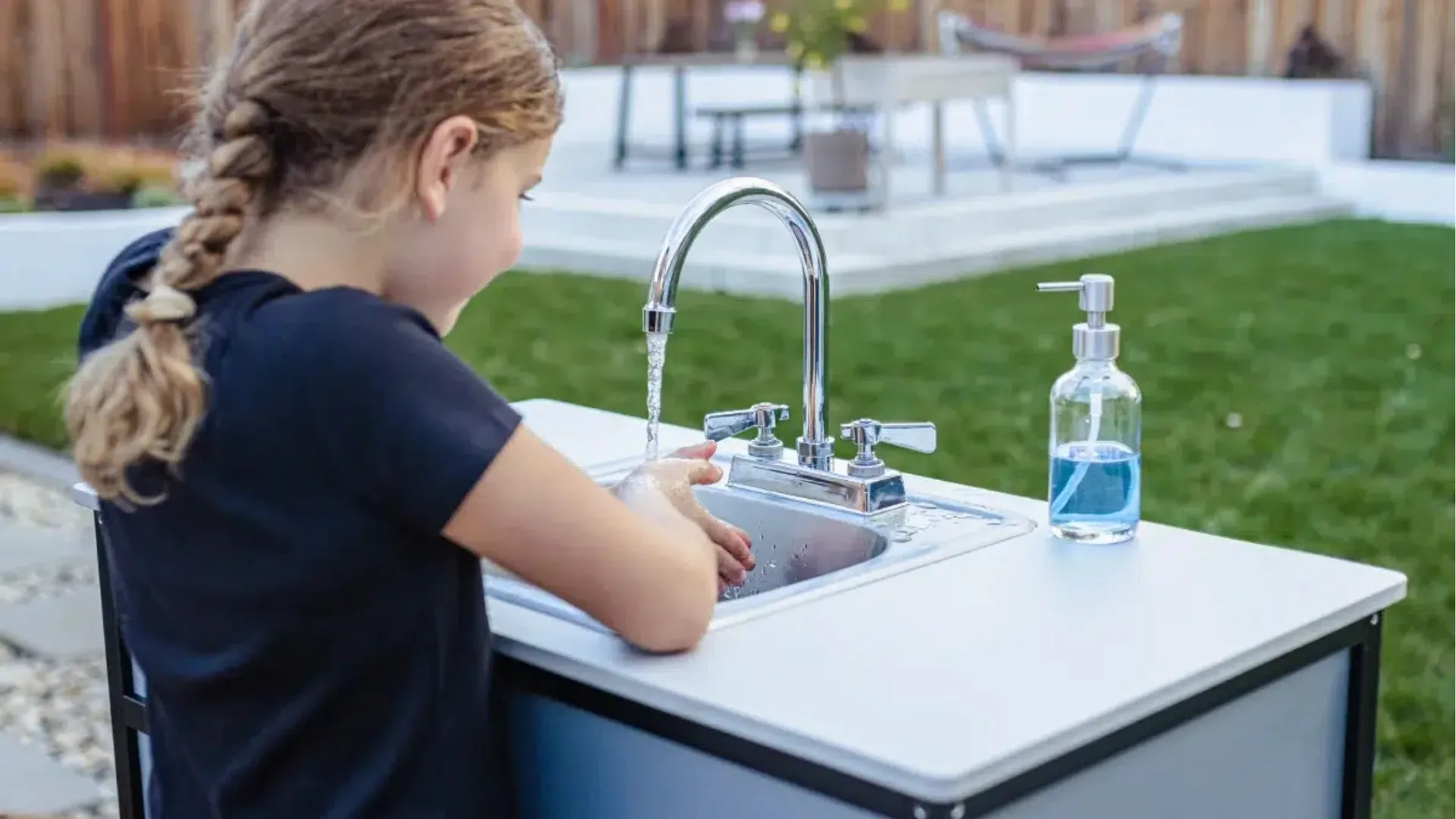
Field labor operations follow OSHA 1928.110, not the construction standard. That rule requires potable water, toilets and handwashing capability for hand-labor employees, at a ratio of one facility per 20 employees, and the facility has to sit within a quarter mile walk of where people are working. That is a meaningfully tighter placement rule than most construction sites deal with, because a porta john parked at the edge of a 40-acre field does nobody any good. Downtown DC Porta Pros builds routes around that quarter-mile rule for farm and agricultural restrooms, and pairs handwashing units alongside the toilets rather than treating them as an afterthought. General potable water access is also required under OSHA 1926.51(a)(1), which applies broadly across construction sites in Downtown DC regardless of what else is on the job. If you are scoping a mixed site with both field labor and general construction crews, it is worth reviewing handwashing station rental options that can serve both groups from one delivery.
There is no single fixed ratio for handwashing stations the way there is for toilets under OSHA 1926.51(c). Most crews size handwashing capacity to match toilet count, one station per toilet cluster, though ANSI/PSAI Z4.3 sets a baseline service interval of one visit per week for up to 10 users across a standard 40-hour week, which is a useful proxy for sizing. A downtown jobsite near the National Mall or a rowhouse renovation near Capitol Hill has different foot traffic than a rural site, so how many porta potties do i need is worth reading alongside this page before you finalize a count. Event organizers planning something in Downtown DC, whether a street festival or a race route, should check event restroom rental or marathon and race restrooms for guidance specific to crowd-based sizing rather than crew-based sizing. Downtown DC Porta Pros can walk a site plan with you before delivery to confirm placement and station count.
Placement rules borrow from ADA guidance even on sites without a legal ADA obligation, because they describe workable, safe access. ADA Standards section 403.5.1 calls for a minimum 36 inch clear route to any station, and section 302.1 requires the ground surface under and around it to be stable, firm and slip resistant, which matters on a gravel lot or a half-graded site in Downtown DC. Operable parts, the soap dispenser or the foot pump, should need no more than 5 pounds of force to activate under section 309.4, and reach height tops out around 48 inches under section 308.2.1. Where accessible portable toilets are clustered nearby, ADA Standards section 213.2 requires at least 5 percent of the units, and never fewer than one, to be accessible; see ADA accessible porta potty and ADA restroom requirements for the full picture. For general siting logic beyond ADA, read the porta potty placement guide. A delivery truck also needs roughly 60 feet of straight clearance behind it, a fact worth knowing if your handwashing stations are riding on the same delivery as a dumpster or restroom trailer.
Downtown DC sites near Hyattsville, about 6.4 miles northeast, and Bladensburg, 6.5 miles northeast, often coordinate handwashing delivery with septic pumping service or grease trap pumping on the same route, since Downtown DC Porta Pros services that corridor regularly. If your project also needs temporary fence rental or a storage container rental, bundling delivery cuts down on separate truck trips. For a broader look at what a fully outfitted site needs, see construction site services.
No. 29 CFR 1910.141(d)(2) specifically requires soap and towels or a hand drying device. Sanitizer gel does not meet that standard on its own, even though it is a reasonable supplement. If your site needs a compliant setup, look at hand sanitizer station rental as an addition, not a replacement.
Often yes, especially outdoors or away from the restroom itself. A deluxe flushable porta potty or restroom trailer rental may include an internal sink, but crews working at a distance still need a station near the work area itself.
1926.51(f)(1) applies only when workers handle paints, coatings, herbicides or insecticides. General sanitation and toilet ratios fall under 1926.51(c) instead. Confusing the two leads to under-equipped sites; check handwashing requirements details against your actual work scope.
Yes. Downtown DC Porta Pros delivers stations for weekend festivals, weddings and races alongside standard units; see wedding restroom rental or festival restroom rental for event-specific setups.
ANSI/PSAI Z4.3 sets a baseline of one service visit per week for up to 10 users over a standard 40-hour week. Higher traffic sites need more frequent visits; ask about your specific headcount when you book.
Yes. Downtown DC Porta Pros delivers handwashing station requirements across Downtown DC and the surrounding metro, with same-day and next-day drop-off available on most orders.
Pricing depends on the unit and how long you need it. See our cost breakdown and request a free quote for an exact figure.
Standard rentals include scheduled service — a pump-out, a clean, a restock and fresh deodorizer. Busy or hot-weather sites can be serviced more often.
Call now or request a free quote — clean units, on-time delivery, transparent pricing.