Concert restroom rental in Downtown DC runs from a single ADA accessible porta potty for a small acoustic show to a full restroom trailer lineup for a stadium-scale crowd, and rental cost lands in the standard event band of $200 to $800 a unit. Downtown DC Porta Pros builds the count around your gate estimate, not a guess.
Start with headcount and how long doors stay open. OSHA 1926.51(c) sets a construction baseline of one toilet for 20 workers, and while a concert crowd is not a jobsite crew, promoters use the same ratio logic to avoid lines wrapping around the barricade. A 2,000-person show at a Downtown DC venue typically calls for a mix of standard porta potty rental units and at least one ADA accessible porta potty, since ADA Standards section 213.2 requires that when single-user units are clustered, at least 5 percent, and never fewer than one, be accessible. For a general-admission floor plus a VIP section, a lot of promoters add a deluxe flushable porta potty cluster near the VIP entry and keep standard units at the main gates. Multi-night runs shift the math again, since a longer rental changes servicing frequency, not just unit count. Our how many porta potties do I need guide walks through headcount math step by step, and our porta potty placement guide covers where crews actually put them relative to stage, sound tower and gate lines. If your show sits closer to Hyattsville, 6.4 miles northeast of Downtown DC, or Bladensburg at roughly the same distance, delivery windows barely change; the truck routing is short either way.
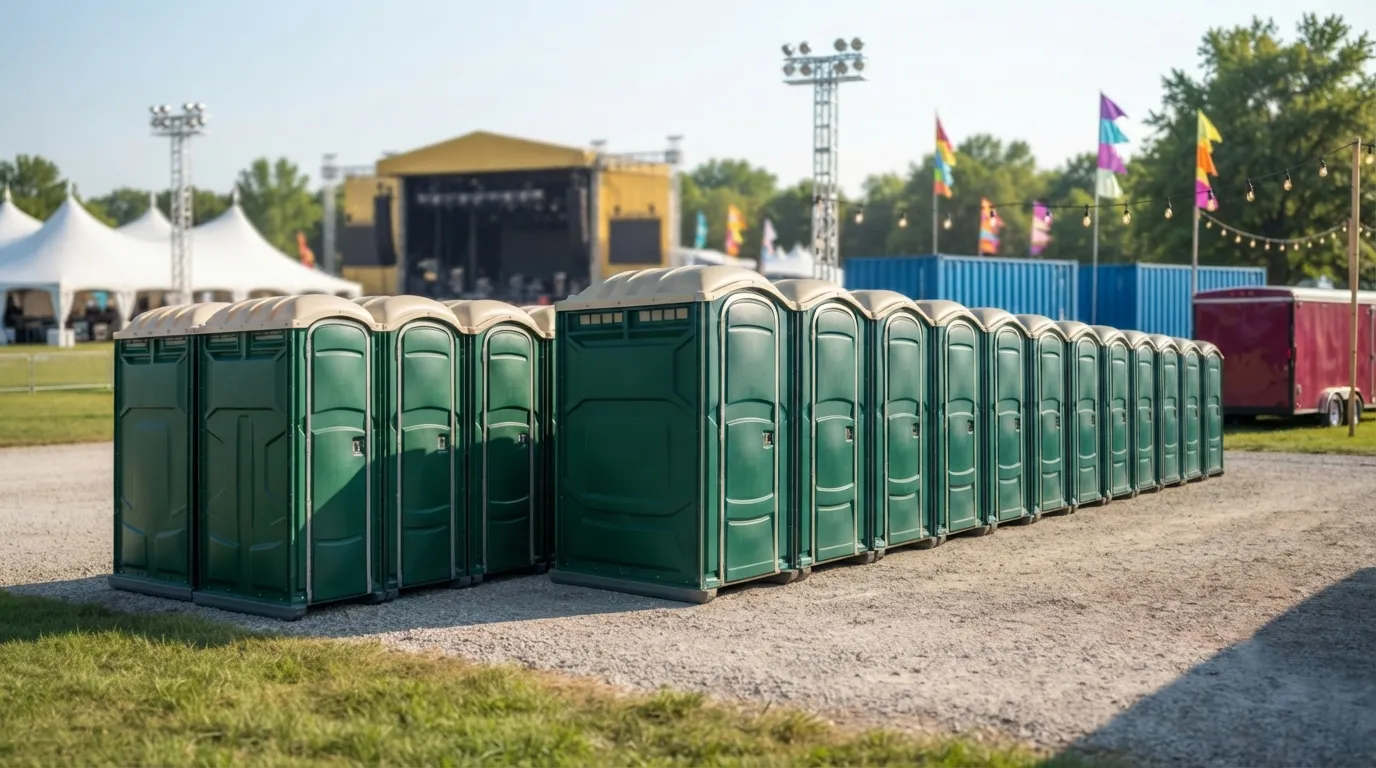
Outdoor concerts need units that stand on their own, since there is no building plumbing to tie into and no lobby to fall back on if a line backs up. A restroom trailer works well for a ticketed outdoor show with a defined footprint, and the 4 stall restroom trailer or 8 stall restroom trailer both handle sustained lines better than a bank of single units spread thin. Indoor venues with limited house restrooms often add portable restroom rental units near loading docks or overflow lobbies rather than replacing plumbing entirely. Either way, ADA Standards section 405.2 caps ramp slope at 1:12 for any accessible unit reached by ramp, and ADA Standards section 304.3.1 requires a 60 inch turning circle inside accessible units, so placement on level, compacted ground matters more than it looks. ADA Standards section 302.1 also calls for stable, firm, slip-resistant surfaces, which rules out loose gravel or soft turf as a pad for an accessible unit. Handwashing is its own line item: 29 CFR 1910.141(d)2 requires soap and towels or a hand-drying device at wash stations, and hand sanitizer alone does not meet that. A handwashing station rental or portable sink rental placed near food vendors covers that requirement cleanly, and our handwashing station requirements page breaks down where the line sits between sanitizer and a real wash station.
Delivery should land the morning of load-in, not the morning of doors, so crews have time to walk the site before gates open. A standard unit needs about 60 feet of straight clearance behind the delivery truck, which matters on tight Downtown DC blocks where loading zones are narrow and street parking eats into staging room. Multi-day festivals or weekend runs need a servicing plan built in up front: ANSI/PSAI Z4.3 sets a baseline of one service visit per week for up to 10 users over a 40 hour week, and a packed concert weekend blows past that fast, so most Downtown DC bookings add same-day or next-day service calls rather than waiting out a weekly cycle. Rain, heat and a full crowd all push servicing intervals tighter than that baseline. If your show is close to the DC line, service routes to Takoma Park at 6.5 miles north and College Park at 10.2 miles northeast run on the same trucks, so a Downtown DC booking does not compete for equipment with those areas. For a same-week or same-day booking, our emergency porta potty rental page covers rush turnaround, and general concert and festival planning sits under our event restroom rental and festival restroom rental pages if your show is part of a larger multi-act event.
Book as soon as the date and expected headcount are set, ideally weeks out for anything over a few hundred attendees. Trailers and ADA units sell out faster than standard units around busy concert weekends. Request a quote early through our request a quote page to lock equipment.
Placement in the public right of way needs confirming with the city; we have not verified a specific Downtown DC ordinance for street or sidewalk placement. Check our porta potty permit requirements page and confirm with the city before finalizing your site plan.
A standard unit is a self-contained single-stall booth, roughly 44 by 48 inches on the ground and about 92 inches tall, with a 60 to 70 gallon holding tank. A trailer offers multiple stalls, running water and interior lighting, better suited to VIP areas or longer multi-day runs. See restroom trailer rental.
Not if you need to meet handwashing standards. 29 CFR 1910.141(d)2 requires soap and towels or a hand-drying device; hand sanitizer alone does not satisfy that requirement. Pair a hand sanitizer station rental with a real handwashing station rental instead.
Standard units for event bookings run $200 to $800 depending on count, duration and features, with trailers priced separately based on stall count and length of rental. See our restroom trailer rental cost and porta potty rental cost pages for full breakdowns by unit type.
Yes. Downtown DC Porta Pros delivers concert restroom rental across Downtown DC and the surrounding metro, with same-day and next-day drop-off available on most orders.
Pricing depends on the unit and how long you need it. See our cost breakdown and request a free quote for an exact figure.
Standard rentals include scheduled service — a pump-out, a clean, a restock and fresh deodorizer. Busy or hot-weather sites can be serviced more often.
Call now or request a free quote — clean units, on-time delivery, transparent pricing.